
ICU
Transpulmonary Pressure
Simulator
Transpulmonary Pressure:
PL
=
Paw
−
Pes
⌨ Keyboard Shortcuts
Space
Pause / Resume animation
I
Inspiratory pause
Freezes waveform at end-inspiration to read plateau Paw and inspiratory PL
E
Expiratory pause
Freezes waveform at end-expiration to read PEEP and expiratory PL
1
Switch to Normal mechanics profile
2
Switch to ARDS profile
3
Switch to Obesity profile
F
Toggle fullscreen mode
Ideal for projector or bedside teaching
D
Toggle dark / light theme
?
Show / hide this shortcuts panel
Esc
Exit fullscreen or close this panel
⚖️ Same settings — different patients
Adjust sliders to see how the same ventilator settings produce different pressures in each patient
Normal
Paw plateau—
Pes—
Exp PL—
Insp PL—
ΔPL—
Obesity
Paw plateau—
Pes—
Exp PL—
Insp PL—
ΔPL—
ARDS
Paw plateau—
Pes—
Exp PL—
Insp PL—
ΔPL—
🧑⚕️ Patient
Normal mechanics
Lungs and chest wall are compliant. Risks are minimal at standard pressures.
PAW
0
cmH₂O
PES
0
cmH₂O
Insp PL
—
cmH₂O
Paw
0
Pes
0
PL
0
RR 12 /min
I:E 1 : 2
Ti 1.67s
📊 Monitor
PEEP titration guide
—
- Insp PL < 20–25 cmH₂O
- Exp PL 0 to +2 cmH₂O
- ΔPaw < 15 cmH₂O (ARDS: <13)
- ΔPL transpulmonary < 10–12 cmH₂O (ARDS)
- PEEP titrated to Exp PL 0–+2
- Plateau Paw < 28–30 cmH₂O (ARDS)
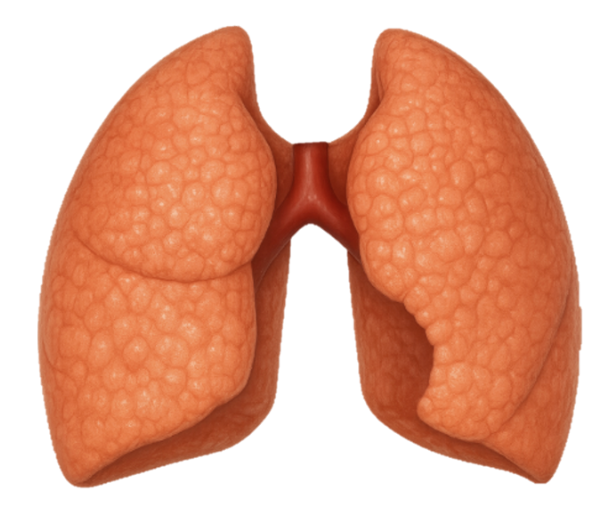
Transpulmonary pressure is the pressure gradient across the lung — the difference between airway pressure and pleural pressure. Esophageal pressure (Pes) is a validated surrogate for pleural pressure in passively ventilated patients. When Pes is high (e.g. obesity), a high Paw may not reflect true lung stress — only PL reveals what the lung is actually experiencing.
Oesophageal pressure is a surrogate for pleural pressure — not a direct measurement:
- Mediastinal weight — the heart and surrounding structures add a positive offset (~3–5 cmH₂O) not present in true Ppl
- Positional gradient — in supine patients, pleural pressure varies vertically (~0.2 cmH₂O/cm); Pes reflects mid-chest only, not dorsal or ventral regions
- Balloon artefact — filling volume, catheter position (ideally lower third of oesophagus) and cardiac oscillations all affect signal quality
- Elastance method — many centres use ΔPes/ΔPaw (elastance ratio) rather than absolute Pes to partially correct for mediastinal offset
In this simulator: PL is modelled using an elastance-derived approach (ΔPL = ΔPaw × Cl / [Cl+Cw]). Displayed values carry ±3–5 cmH₂O uncertainty. Interpret trends and relative changes rather than absolute numbers alone.
Step 1 of 7
⚡ Rapid-fire Quiz
Score: 0
Question 1 of 10
Educational use only. Values are modelled approximations based on simplified respiratory mechanics. This simulator is not a substitute for clinical judgment, bedside measurement, or institutional protocols. Transpulmonary pressure targets require validated esophageal manometry. Always assess individual patient physiology.