Lung Pressure–Volume Simulator
mL / cmH₂O
mL
Pressure (ΔP): 5
cmH₂O
Elastance (1/C): 0.01
cmH₂O/mL
Compliance (C) = ΔV / ΔP
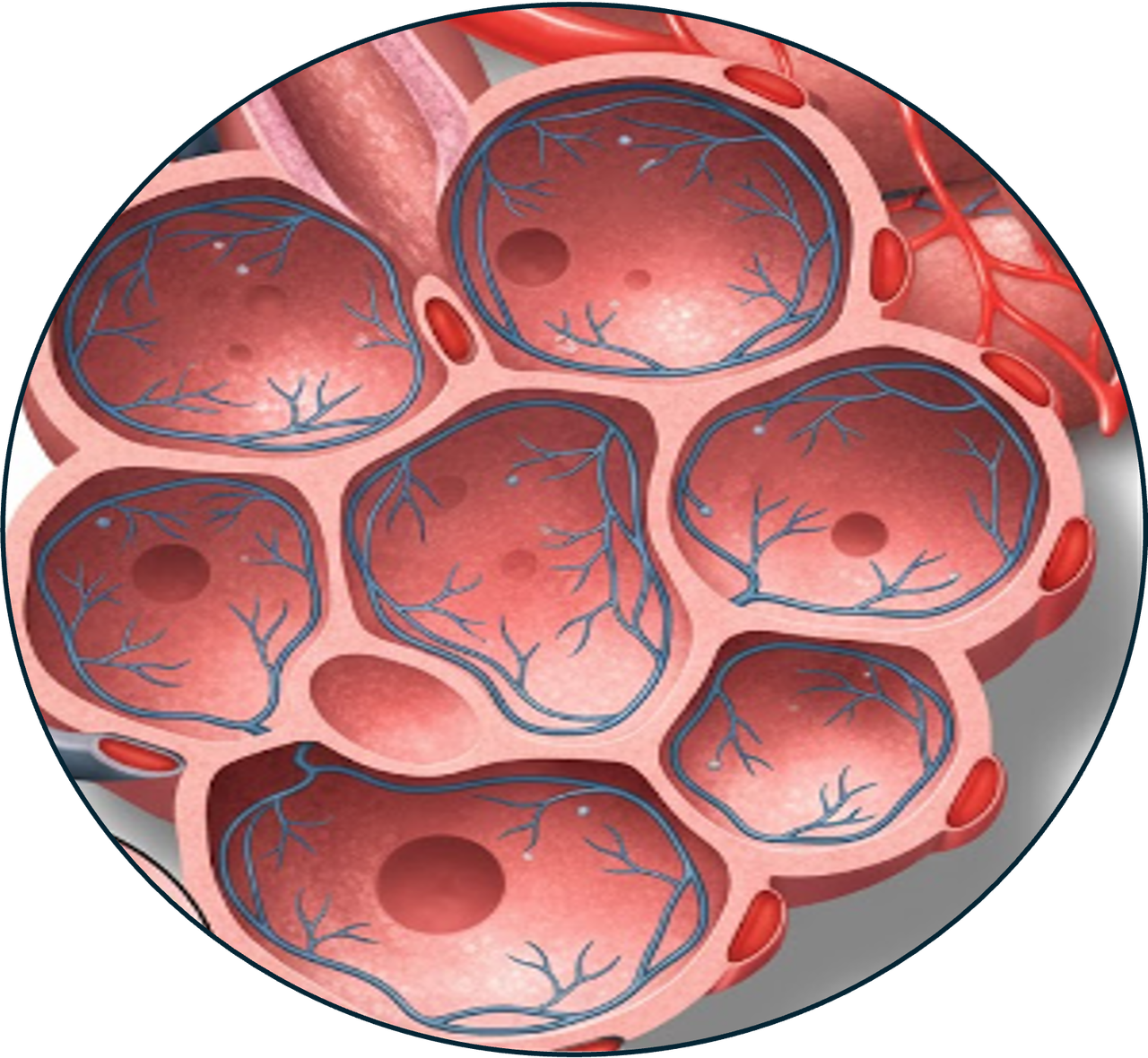
*In the simulator, the thickness around the alveolar sac represents lung and chest wall compliance: thicker borders indicate lower compliance (stiffer lungs), thinner borders indicate higher compliance (more flexible lungs)
📖 Clinical Notes (click to expand)
Static compliance <50 mL/cm H₂O is common in ICU patients and is associated with extubation failure1.
Driving pressure >15 cm H₂O is associated with increased mortality, especially in ARDS2.
🫁 Changes in Compliance (click to expand)
Increased Lung Compliance
- Normal ageing
- Asthma attack
- Emphysema
Decreased Lung Compliance
- Alterations in lung volume and consolidation
- Compliance is reduced at extremes of lung volume. Highest at FRC.
- Children
- Pneumonectomy/lobectomy
- Atelectasis/collapse
- Pneumonia
- ARDS
Increased pulmonary blood volume/venous congestion
- APO
Increased surface tension
- Reduced surfactant
- Hyaline Membrane Disease
Impaired parenchymal compliance
- Pulmonary fibrosis
Increased Chest Wall Compliance
- Collagen disorders
Decreased Chest Wall Compliance
- Chest wall restriction/structural abnormalities
Examples:
- Obesity
- Spastic paralysis of chest wall musculature
- Ossification of costal cartilages
- Kyphosis/scoliosis
- Scarring/constriction (e.g. circumferential burns)
- Position
Effect:
- Prone (60% reduced compliance)/supine. This is due to the effect of position on lung volume.
📚 References (click to expand)
1. Epstein SK. Predicting extubation failure. Chest. 2002;121:1061–3.
2. Amato MBP, et al. Driving pressure and survival in ARDS. N Engl J Med. 2015;372:747–55.
3. Changes in Compliance. https://partone.litfl.com/compliance.html